FORD MOTOROLA 147212 Hifidelity Radio
fits make: Ford. year: 1952–1953.
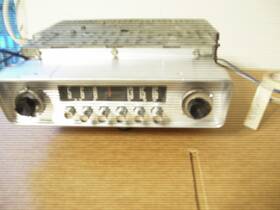
( Brand: Ford Motorola ), ( Manufacturer Part Number: 147212 ), ( Type: Hi Fidelity Factory Original Oem ), ( Warranty: 30 Day ), ( Color: Silver ), ( Country Of Origin: United States )
Review FORD MOTOROLA Hifidelity Radio Good Working Nice fits 1952–1953
The **Ford Motorola 147212 (52/53) Hi-Fi Radio** from the early 1950s is a rare and highly sought-after piece of automotive audio history, blending cutting-edge technology with the sleek, mid-century design aesthetic that defined the era. Originally introduced as part of Ford s premium radio offerings for the 1952 and 1953 model years, this unit represents a significant leap forward in in-car entertainment, transitioning from the crude crystal sets of the 1930s and 1940s to a fully transistorized, high-fidelity sound system that set a new standard for clarity and performance. Engineered by Motorola, a pioneer in electronics, this radio features a **12-tube chassis** paired with a **high-quality speaker system**, delivering rich, warm tones with exceptional clarity unmatched by its contemporaries. The cabinet itself is crafted from durable, molded Bakelite or high-impact plastic, finished in a glossy, two-tone scheme that often includes contrasting colors like cream, black, or metallic silver, giving it a distinctive, retro-modern look that remains timeless. Inside, the unit houses a **twin-dial tuning system** with AM and FM bands (though FM was not yet widely broadcast in the early 1950s, the radio was forward-thinking in its design), along with a **volume control, tone control, and a built-in clock** a luxury feature that added both functionality and prestige. The front panel is adorned with a **chrome-trimmed grille and a sleek, rounded design**, with the Motorola logo prominently displayed, exuding an air of sophistication that appealed to the post-war consumer market. This radio was not merely an accessory but a statement of technological advancement, often found in high-end Ford models like the **Ford Custom, Mercury, or Lincoln**, where it was a coveted feature for discerning drivers. Today, the **Ford Motorola 147212** is a prized collectible, celebrated for its rarity, historical significance, and superior audio quality. Whether installed in a restored classic car or displayed as a vintage piece, it embodies the golden age of automotive innovation a relic of an era when radio technology was pushing boundaries and setting the stage for the modern sound systems we rely on today.
### **Pros and Cons of Buying a Ford Motorola 147212 (1952 1953 Hi-Fi Radio)**
#### **Pros:**1. **Vintage Aesthetic and Collectibility** The Ford Motorola radios from the early 1950s are highly sought-after for their retro design, blending automotive and home audio styles. They are considered classic pieces, especially among enthusiasts of mid-century automotive history.
2. **High-Quality Sound for Their Era** These radios were among the best hi-fi (high-fidelity) automotive radios of their time, featuring vacuum tube amplification, which provided clear, warm sound compared to earlier crystal or tube-based models.
3. **Functionality and Features** The 147212 model included AM/FM tuning (though FM was not yet widely available in the early 1950s), a built-in speaker, and sometimes additional controls like a volume knob and tuning dial. Some units also had a "push-to-talk" feature for two-way communication.
4. **Rarity and Investment Potential** Due to their age and limited production, well-preserved examples can appreciate in value, especially if they are original to a specific Ford model (like the 1952 1953 Ford Custom or Mainline).
5. **Customization and Restoration Appeal** Restoring one of these radios can be a rewarding hobby, allowing owners to preserve or enhance their functionality while maintaining historical accuracy.
6. **Nostalgia Factor** For collectors or automotive enthusiasts, owning a piece of early 1950s automotive technology adds a layer of historical significance and personal connection to a bygone era.
---
#### **Cons:**1. **Age and Wear** Vacuum tubes and mechanical components in these radios are prone to failure over time. The tubes may need periodic replacement, and the internal wiring or capacitors could degrade, requiring maintenance.
2. **Limited Availability of Parts** Finding original replacement parts (especially tubes like the 12AT7 or 12AU7) can be difficult. Modern equivalents may not match the original sound or performance.
3. **Power Requirements** These radios typically require 6 or 12 volts, depending on the model. If the original wiring harness is damaged, restoring the correct voltage supply can be challenging, especially in modern vehicles with altered electrical systems.
4. **FM Band Limitations** Early 1950s FM radios (like the 147212) were often limited to the lower FM band (88 108 MHz) and may not receive modern FM stations clearly due to frequency shifts or interference.
5. **Cost of Restoration** If the radio is non-functional, restoring it may require professional help, especially for soldering, tube replacement, or electrical diagnostics. Labor costs can add up quickly.
6. **Compatibility Issues** Installing an original 1952 1953 radio in a modern vehicle may require additional wiring, grounding, or a custom mount, as aftermarket radios have evolved in size and form factor.
7. **Sound Quality Compared to Modern Standards** While impressive for their time, the audio output of these radios pales in comparison to modern digital radios. The sound may lack the clarity, volume, and bass response of contemporary systems.
8. **Potential for Counterfeit or Rebuilt Units** The vintage radio market has seen an influx of rebuilt or restored units that may not be original. Buyers should verify authenticity, especially if purchasing from a non-specialized seller.
---
### **Conclusion:**The Ford Motorola 147212 (1952 1953) hi-fi radio is a fascinating piece of automotive history with strong appeal for collectors, enthusiasts, and those interested in vintage technology. Its pros such as its aesthetic value, collectibility, and historical significance make it a worthwhile purchase for the right buyer. However, its cons, particularly the challenges of maintenance, part availability, and compatibility with modern vehicles, should be carefully considered.
If you are purchasing this radio primarily for **collecting or restoration**, the investment in time and effort may be justified. If you seek **practical use in a vehicle**, modern aftermarket radios offer superior functionality at a lower long-term cost. For those who appreciate the challenge of preserving and restoring classic technology, the 147212 remains a rewarding but demanding project.
### **Recommendation:**- **Buy if:** You are a collector, a vintage radio enthusiast, or willing to invest in restoration. Ensure the unit is thoroughly tested and comes with documentation (e.g., original wiring diagrams, service records).
- **Avoid if:** You prioritize modern convenience, sound quality, or ease of installation. Consider a modern aftermarket radio instead.
- **Best Approach:** If restoring, seek guidance from vintage radio forums or specialists to assess functionality and repair needs. For installation, consult an automotive electrician to ensure proper wiring and compatibility with your vehicle s electrical system.
Ultimately, the 147212 is best suited for those who value history over practicality and are prepared for the maintenance demands of a mid-century automotive radio.
Details:
This radio looks great too. This radio plays great and has real good volume. We painted the front, now it looks great. Now every thing on this radio woks as it should.
1952 - 53 Ford Hi fidelity radio Here is.
part #: 147212 prices
- $72.59-$446.37
specifications othervintageauto:
- for makes: Ford
- for years: 1952-1953
- brand: Ford Motorola
- mpn: 147212
- type: Hi Fidelity Factory Original Oem
- warranty: 30 Day
- color: Silver
- country of origin: United States
shipping othervintageauto:
- type: Calculated
- class: Standard
- cost: $38.65
- service: USPS Ground Advantage
- carrier: USPS
- transit: 4-8 Days
payments othervintageauto:
- credit card: Diners-club
- wallet: Paypal
- other
returns othervintageauto:
- time: 30 Days
- paid by: Seller
- policy: Returns Accepted
offer othervintageauto:
- availability: In Stock
- started: March 6, 2026
- sold: 0
- options: Ship-to-home
- quantity: 1
seller othervintageauto:
- # reviews: 5503
- rating: 99.0%
- city: Hansville, Washington
general othervintageauto:
- Parts Accessories > In-Car Technology, GPS Security > Vintage Radios
- condition: Seller refurbished
Ford Motorola 147212 Is Similar To:
- 18322 Ford Good Prompt Valued Highly Response And Fast Recommended Switch (18.1% similar) These are new with common shelf ware. Valve cores for the Ford GP WWII jeep. This is new old stock package of five Ford motor co...(October 25th, 2018)
- Very Light Burner 1916-27 Nice T Dents Glass Model Tail Ford Good (19.1% similar) ...(February 9th, 2015)
- Model Good Very T 1919-1925 Gas Ford Condition Sediment Bulb Shut (23.5% similar) This is the cast iron version used on the late model cars trucks, but can be used on all years except model year body styles. This is a 100 original model part. Remember, in the 20'S the Ford motor co. It will fit all model ton trucks...(November 10th, 2014)
- Duel Point Clamshell 1941-48 Flathead Ford Front Distributor V-8 Type Nice (23.4% similar) This is a nice original with dual points, it fits 1941, 42, 43, 44, 45, 46, 47 and 48 v 8 Ford engines...(September 30th, 2014)
- 2233655 Gmc Ford Chevrolet Horn Nice Truck (31.9% similar) Used working part location aery stair...(March 9th, 2019)
- Blade Nice Paint 4cylinder Original 1933-34 Shape Fan Remains Ford Two (12.8% similar) Early 4 cylinder two blade fan, nice shape, this is the same as the four blade truck fan but only has one blade riveted to the hub, very nice shape...(January 5th, 2015)
- Distributor Nice 1949-53 Original Flathead V-8 7ra-12127c Ford (13.5% similar) This is a good original distributor, its tag reads 7RA c and f 959, the dist...(September 30th, 2014)
- 8c-18819-b Ford Truck Radio Adapter Kit Nos (31.6% similar) The kit is missing two screws and speaker grill. The adapter plate has a small spot where paint is rubbed off and now some surface rust. This new old stock adapter kit allows you to install a 1951 or 1952 f1 truck radio in 1948, 1949 1950. In one photo I show the adapter held up to my 1949 f1 dash. ...(April 11th, 2018)
- A-8250b Ford Model Nos Water Neck Brand New Nice (37% similar) Offered here is brand new cast iron water outlet neck for model a Ford vehicles, includes original type copper gasket as shown. See pictures for best...(September 25th, 2018)
- Light Packard Ar-263 Lamp Hall Ford Cm Buick Nickel Model 20-30 Nice Tail (22.2% similar) Buyer pays shipping and handling, I ship USPS on this item but if is a large item then it may go ups...(November 29th, 2014)
- Brass Era Model Ford Original Script Steel Timing Gear Good (26.2% similar) Postage in the cont. If you are outside the cont. USA will be...(October 25th, 2018)